
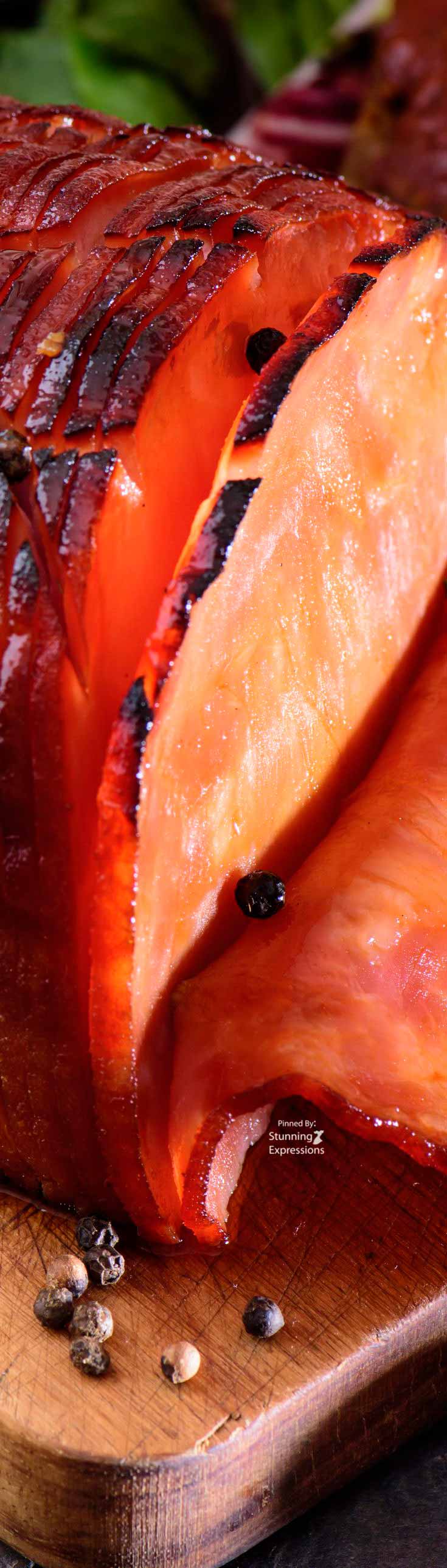
Fully Cooked Ham

How to Heat a Fully Cooked Ham. A ‘fully cooked’ ham can be sliced and eaten cold in sandwiches and salads, but the flavor and texture are greatly improved by heating. Here’s how to heat a ham labeled “fully cooked.” These instructions apply to hams which are packaged in USDA inspected plants. Hams which are not from USDA inspected plants are heated to 165 F. TotallyChefs
-
First, check the label for instructions. It should be labeled ‘fully cooked’ or ‘cook before eating.’
Preheat the oven to 350° F (180° C/Gas 4).
Place the ham on a rack in a baking pan and add about 1/4 inch of water to the pan.
If the ham is labeled ‘fully cooked’ (does not require heating), heat for 8 to 10 minutes per pound, or to an internal temperature of 140°F.
To heat a spiral-sliced ham, place it on a sheet of heavy-duty foil, cut-side down. Wrap the ham tightly with the foil and bake at 300° F (150° C/Gas 2) for about 15 minutes per pound, or until a meat thermometer registers 140° F when inserted into the thickest part of the meat, not touching bone.
If the ham is labeled ‘cook before eating,’ heat to an internal temperature of at least 145°F.
If you have a large enough slow cooker, put the ham in it and add about 1 cup of ginger ale, cola, stock, or water. Heat on low for 8 to 10 hours, or until the temperature reaches 140° F for a ‘fully cooked’ ham or 145° F for a ‘cook before eating’ ham.
- If you are glazing the ham, you might want to score it. This makes for an attractive presentation, and it will allow the glaze to penetrate the meat. With a sharp knife, score the surface of the ham in a diamond pattern. For extra flavor, if desired, insert a whole clove into each cut intersection or in the centers of the diamonds.
- To glaze a cooked ham, increase the oven temperature to 400° F (200° C/Gas 6) and brush the glaze over the meat. Bake the ham until the glaze is golden brown. A small ham or ham slice can be glazed and then browned quickly under the broiler.
- The picnic ham or smoked shoulder tastes like ham but is not real ham (a true ham comes from the hind leg of the animal). It is fattier than a ham, requires longer cooking, and has more bones.